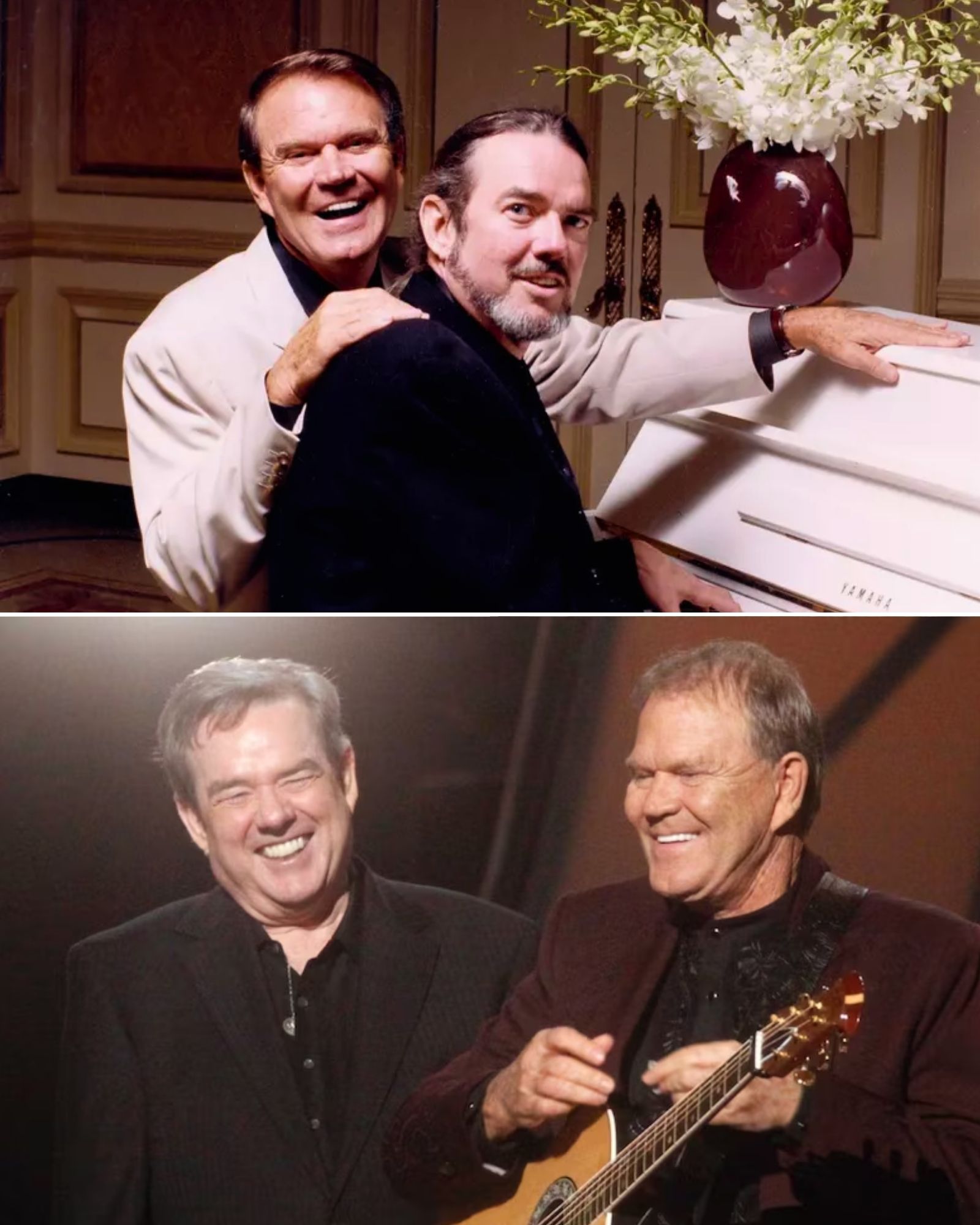
Some of the greatest songs in country music took years to get right. “Wichita Lineman” took one afternoon, and the man who wrote it never believed it was done.
Jimmy Webb sent it to Glen Campbell with a warning that it still needed a third verse. Glen never waited for one. He went into the studio, filled the gap himself, and turned an unfinished song into one of the most beloved records of the 1960s.
A Phone Call From Glen
In 1967, Glen Campbell had his first real taste of chart success with Jimmy Webb’s “By the Time I Get to Phoenix.” Glen was grateful, and he wanted more. So he called Jimmy and asked if he could write another song about a place, something in the same spirit as “Phoenix.”
Jimmy did not have anything ready. But he had a memory.
The Man on the Telephone Pole
Jimmy Webb grew up in Oklahoma. He remembered driving across the flat, empty country there in the heat of summer, watching telephone poles appear far off in the distance and rush past one after another. Then something caught his eye:
“There was a man on top, talking on a telephone.”
Jimmy knew the man was a lineman, a worker who kept the phone lines running. In those days, many rural telephone systems were run by the county, and linemen worked for the county. Jimmy tried to imagine himself up on that pole with the phone in his hand. Who was this man talking to, so far from everyone?
He set the song in Wichita, Kansas, and he wrote it that same afternoon at his house. He also thought of his uncle, who had worked as a lineman in California, and pictured him alone on a pole in the middle of nowhere.
“Here’s the Song, but It’s Not Finished”
When Jimmy sent “Wichita Lineman” to Glen and producer Al De Lory, it had only two verses. He told them plainly that it was not finished and that he still needed to write a third verse.
Then he heard nothing. A few weeks later, he ran into Glen and said he figured they had not liked the song. Glen’s answer surprised him:
“Oh, we cut that.”
How Glen Filled the Missing Verse
The session took place at Capitol Records in Los Angeles with members of the famed group of studio musicians later known as the Wrecking Crew. Glen Campbell had been one of them himself before becoming a star.
Bassist Carol Kaye came up with the descending notes that open the record. Glen loved her idea, and he loved the deep, twangy sound of her Danelectro six-string bass. So he asked if he could borrow it.
Where Jimmy’s third verse should have been, Glen played the melody on that bass himself. That solo, with its wobbling tremolo, became one of the most recognizable moments in the song. Jimmy also played organ on the session, holding two notes that sounded like a signal humming down a telephone wire.
A Song That Became a Classic
“Wichita Lineman” was released as a single in the fall of 1968. It topped the Billboard country chart for two weeks, reached No. 3 on the Hot 100, and spent six weeks at No. 1 on the adult contemporary chart. It was certified gold in January 1969. The album of the same name also went to No. 1 on the country albums chart.
It became Glen Campbell’s favorite of all the songs he recorded. Years later, the Library of Congress added his recording to the National Recording Registry. Bob Dylan once called it the greatest song ever written.
The Verse That Never Came
After Glen Campbell died in 2017, Jimmy Webb sang “Wichita Lineman” at the CMA Awards with Little Big Town as a tribute to his old friend.
Jimmy is still writing and performing today. This October, PBS is airing a concert special celebrating his career, and a new album of his previously unreleased songs is coming out. But when it comes to “Wichita Lineman,” he still says the same thing he said in 1968. In his mind, the song was never quite finished.
Most of us would never know a verse was missing. Do you remember where you were the first time you heard Glen sing it?