Scroll to the end of the article to hear the song.
The song is “Footlights,” the opening track on Merle Haggard’s 1979 album Serving 190 Proof. He wrote it alone, it was never released as a single, and in a 2005 interview with All About Jazz he called it “a song about me, about what I do for a living,” adding that it might describe him better than any song he had ever written about himself.
To understand why, you have to go back to a phone call.
Five Minutes to Nine
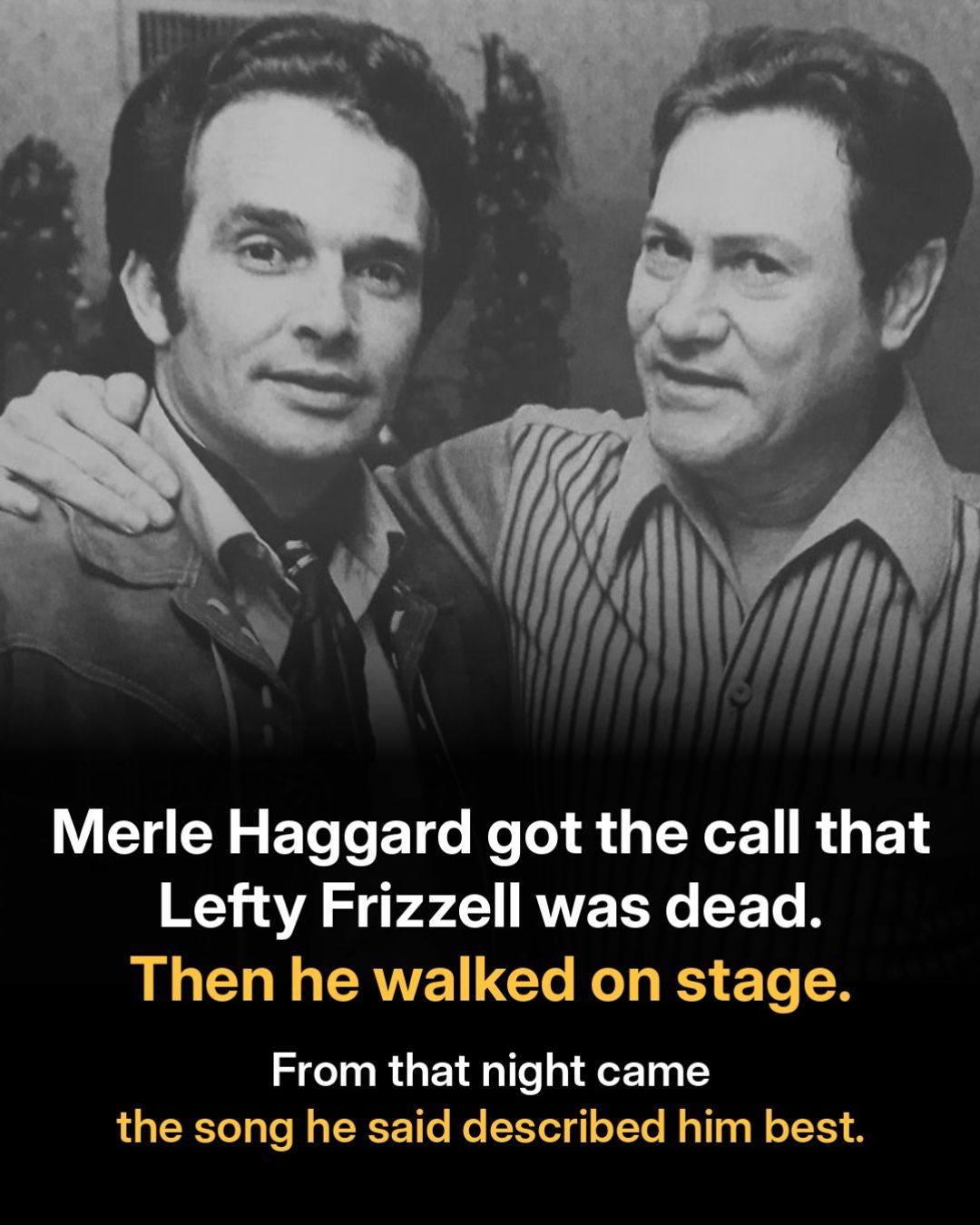
Lefty Frizzell died on July 19, 1975. Merle Haggard got the news by phone at five minutes to nine one night, with a show still ahead of him. He told the story to writer Peter Guralnick for a long profile, “Haggard at the Crossroads,” published in Country Music magazine in early 1981.
Haggard said he went on that night, and that it was a hard thing to do. Then he explained why. When a plumber loses someone close to the family, he stays home from work. An entertainer doesn’t get that choice.
“Entertainers have the same feelings as anyone else.”
The difference, as Merle put it, is that a performer has to fake his way through those feelings. Somebody points a camera, and you smile whether you feel like smiling or not. He called it part of the profession, but said that sometimes that part of the job made him feel like he was selling himself. That, he told Guralnick, is what the song is about. He guessed that “Footlights” maybe started the night that call came.
Note the word he chose: maybe. Haggard never claimed he sat down and wrote the song that night. Daniel Cooper, writing the liner notes for the 1994 box set Down Every Road, summarized the same account as Merle having to face an audience minutes after hearing his hero was gone.
Why Lefty Frizzell Mattered So Much
Lefty Frizzell was more than a singer Merle Haggard admired. He was one of the voices Merle learned from as a boy, playing along with the records at home. As a teenager in Bakersfield, Merle got backstage at one of Lefty’s shows, and Lefty had him sing for the crowd. Accounts of that night differ on the details and on Merle’s exact age, but Haggard pointed to it as the moment performing took hold of him.
So the man who had once handed a teenage Merle his own crowd was gone, and Merle Haggard still had to walk out under the lights and give people their show.
What the Song Carries Onto the Stage
“Footlights” never mentions Lefty Frizzell. Instead, it describes a singer who is forty-one years old and living the kind of life most men only dream about, yet has nothing waiting for him when the show is over. After twenty years of picking, he hides his age, tosses his guitar across the stage to his bass player because the crowd loves it, and puts on a grin made for the cameras.
That camera-ready grin is the same image Haggard used when he talked to Guralnick about having to smile through grief. The song and the interview describe one feeling from two sides: what the audience sees, and what the singer is carrying.
The rest of Serving 190 Proof stays in that territory, with songs about drinking, depression and a marriage coming apart on the road. Guralnick framed his 1981 article as a portrait of the artist in midlife, and the album has since become a favorite of many longtime Haggard fans.
Never a Single
Other songs from the album, among them “Red Bandana” and “My Own Kind of Hat,” went to radio as singles. “Footlights” was not one of them. Talking to Peter Cooper of American Songwriter in 2010, Merle Haggard said the song had become a big one over the years anyway, and that the record company had acted as if they didn’t understand it.
Audiences did. It became a staple of his concerts. In 2006, when Haggard and George Jones made a duet album together, they named it Kickin’ Out the Footlights…Again and put the song first.
Merle Haggard died on April 6, 2016, his 79th birthday. Exactly ten years later, on April 6, 2026, Cody Johnson released his own recording of “Footlights.” In his version, the singer is no longer forty-one. Johnson changed the age to his own: thirty-eight.