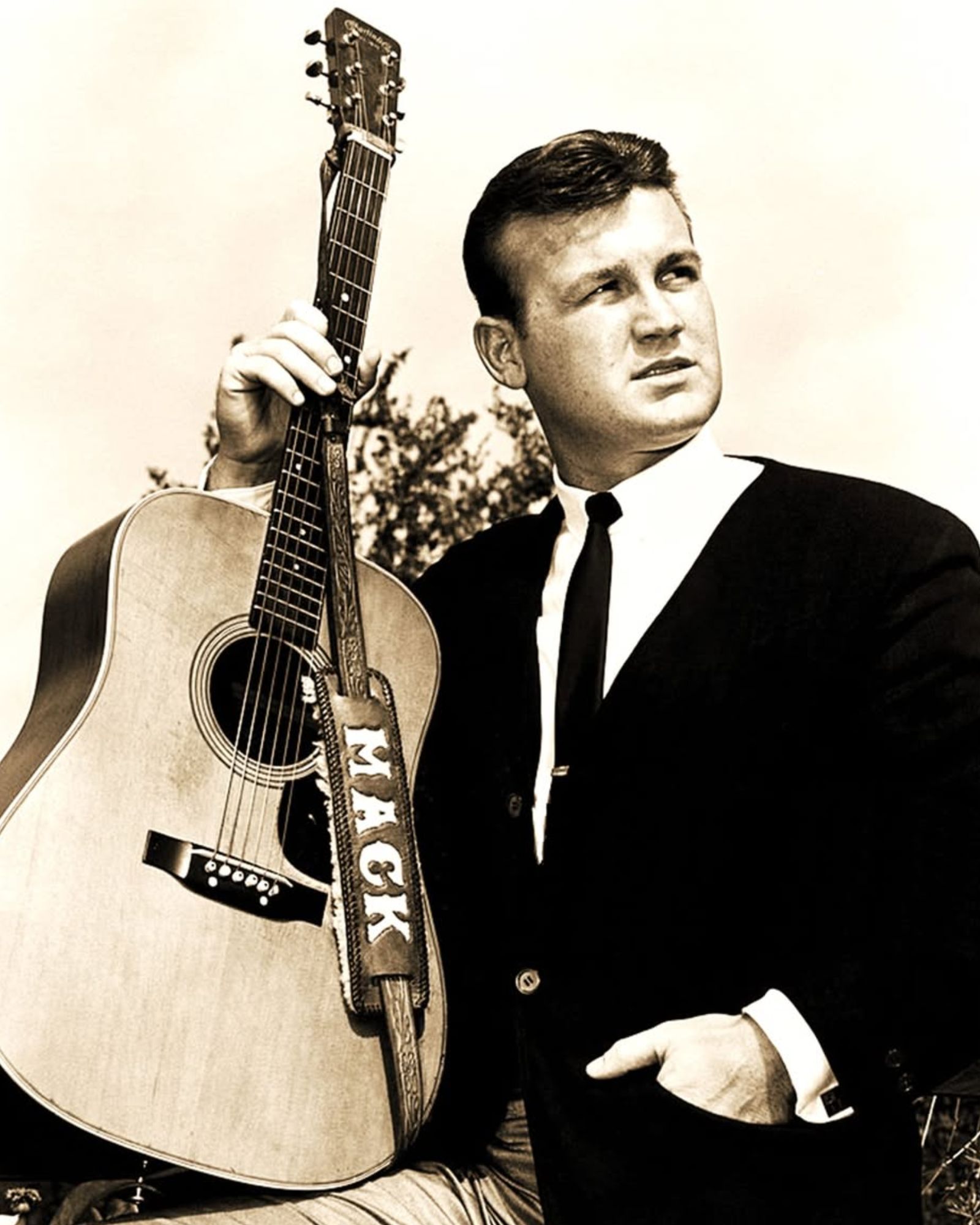
Seven years can feel like a long time between hit records. For Warner Mack, the distance between an early breakthrough and another country Top 10 hit stretched from 1957 to a recording released in October 1964. The song that finally closed that gap was “Sittin’ In An All Nite Cafe,” written by Jim Glaser.
The title offered a setting country listeners could recognize immediately: a place that stayed open when much of the world had gone to bed. In Warner Mack’s recording, that familiar setting became the home of a very familiar feeling. The song was about loneliness, and Warner Mack gave that loneliness a voice.
A long wait after an early hit
Warner Mack had already experienced chart success with “Is It Wrong (For Loving You)” in 1957. That record reached the country Top 10 and established Warner Mack as a singer worth remembering. But an early hit does not guarantee that the next record, or even the next several records, will find the same audience.
More releases followed. Warner Mack recorded for different labels before returning to Decca in 1962. By 1964, “Surely” had brought Warner Mack back onto the country chart, although the Top 10 remained out of reach.
That history gives “Sittin’ In An All Nite Cafe” more weight than its eventual chart position alone suggests. For someone hearing the record on the radio, it could simply be a good country song. Within Warner Mack’s career, it represented the return of a level of success that had been absent for years.
A Jim Glaser song found the right voice
Decca issued “Sittin’ In An All Nite Cafe” in October 1964, with “Blue Mood” on the other side. The songwriting credit belonged to Jim Glaser, a member of Tompall & the Glaser Brothers.
Jim Glaser was already part of a musical family known for close harmony singing. Songwriting offered another way for Jim Glaser’s work to reach listeners: through recordings by other performers. Warner Mack’s interpretation of “Sittin’ In An All Nite Cafe” became Jim Glaser’s first major success as a songwriter.
That makes the record an interesting meeting point. Warner Mack brought an established voice and a career searching for another substantial hit. Jim Glaser supplied a song that would help establish a reputation beyond the microphone. The same recording became an important step for both artists.
From a lonely setting to No. 4
“Sittin’ In An All Nite Cafe” climbed to No. 4 on Billboard’s country singles chart, giving Warner Mack the first country Top 10 hit since “Is It Wrong (For Loving You).”
The appeal is easy to understand. An all-night café is a public place where someone can still feel completely alone. That simple contrast gives the song an emotional setting before a listener knows much else. Warner Mack’s performance lets the feeling carry the record.
For listeners who remember country radio from that era, songs like this can also bring back the circumstances of listening: a late drive, a kitchen radio, or music playing while the rest of the house slept. Those memories belong to the audience, but the record leaves room for them.
What followed that night at the café
Warner Mack’s next Decca single, “The Bridge Washed Out,” reached No. 1 in 1965. The long absence from the Top 10 had ended, and an even bigger chart achievement followed.
Jim Glaser’s songwriting career continued to grow as well. With Jimmy Payne, Jim Glaser later co-wrote “Woman, Woman,” the major pop hit recorded by Gary Puckett & the Union Gap.
Those later successes make the earlier café record especially rewarding to revisit. “Sittin’ In An All Nite Cafe” captures a moment before the next achievements arrived: Warner Mack finding a substantial audience again, and Jim Glaser earning an important early songwriting success. A song about spending the night alone gave both artists something lasting to carry forward.