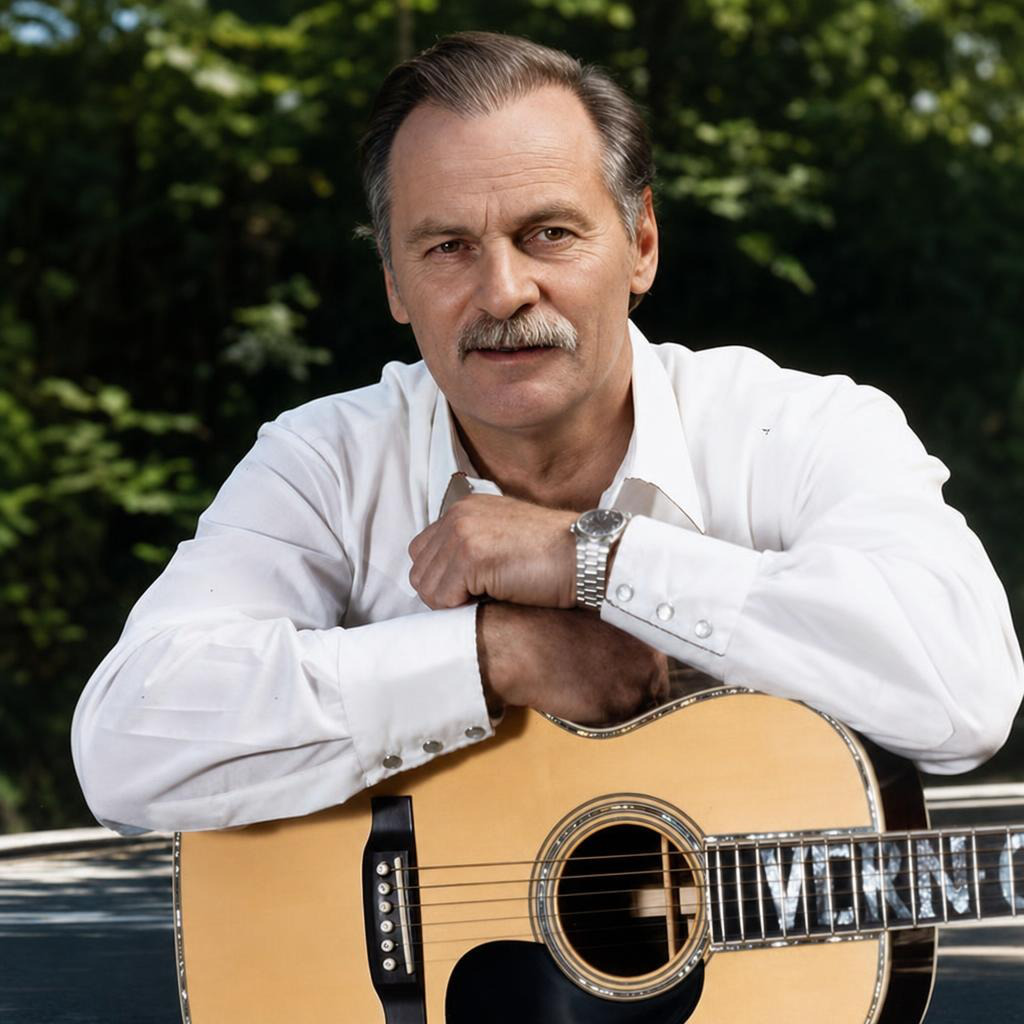
In the spring of 2009, Vern Gosdin was 74 years old and still making plans to perform. The country legend known as “The Voice” was having his tour bus renovated for an appearance at the CMA Music Festival in Nashville that June.
There was no farewell announcement. No grand retirement ceremony. As far as those plans were concerned, Vern Gosdin still had somewhere to go.
But on April 28, 2009, Vern Gosdin died at a Nashville hospital after suffering another stroke. The performance never happened.
For fans who had spent decades listening to “Set ‘Em Up Joe,” “Is It Raining at Your House,” and “Chiseled in Stone,” the news marked the end of one of traditional country music’s most distinctive voices.
The Boy From Alabama Who Became “The Voice”
Born in Woodland, Alabama, on August 5, 1934, Vern Gosdin grew up working in cotton fields and singing gospel music with his family.
In 1961, Vern Gosdin and his brother Rex moved to California, where they became part of the developing bluegrass and country-rock scene. Vern Gosdin worked alongside musicians connected to The Byrds, including Chris Hillman and Gene Clark.
After returning east, Vern Gosdin eventually established himself in Nashville, building a career around traditional country songs about love, regret, and everyday hardship.
Tammy Wynette reportedly considered Vern Gosdin one of the few singers capable of matching George Jones. It was a remarkable comparison in a town filled with extraordinary voices.
By the late 1980s, Vern Gosdin had scored major hits, including the chart-toppers “Set ‘Em Up Joe” and “I’m Still Crazy.”
But one recording would leave an especially lasting impression.
The Real Family Tragedy Behind “Chiseled in Stone”
Released in 1988, “Chiseled in Stone” was written by Vern Gosdin and songwriter Max D. Barnes.
The song tells of a younger man troubled by a relationship and an older man who understands a far more permanent kind of loneliness.
What many listeners never knew was that the song’s emotional foundation came partly from a tragedy in Max D. Barnes’s own family.
In 1975, Max D. Barnes lost his 18-year-old son, Butch Barnes, in an automobile accident.
Years later, Max T. Barnes, another son who became a successful songwriter, explained how that loss had affected his father. Max T. Barnes remembered being awakened by his father and told about his brother’s death.
According to Max T. Barnes, although the song did not recount the accident directly, Max D. Barnes drew upon the lasting grief of losing a child.
That history gives “Chiseled in Stone” another dimension. The recording wasn’t simply another song about a broken relationship. It carried an understanding of loss that could not be repaired by reconciliation.
Vern Gosdin’s restrained, emotional performance brought that story to listeners across America.
In 1989, “Chiseled in Stone” won the Country Music Association’s Song of the Year award for Vern Gosdin and Max D. Barnes.
The Performance Vern Gosdin Never Reached
In the weeks before his death, Vern Gosdin suffered another stroke. Administrative assistant Dawn Hall later told the Associated Press that those around Vern Gosdin had initially hoped for improvement.
Earlier that month, Vern Gosdin had remained independent and involved in his plans.
The renovated tour bus was supposed to help carry Vern Gosdin back to the audience that had supported his music for decades.
Instead, Vern Gosdin died on Tuesday, April 28, 2009.
On May 2, a public visitation was held at Mount Olivet Funeral Home in Nashville from noon until 4 p.m. Funeral services were private.
What George Strait and Other Country Artists Remembered
The country music community did not forget Vern Gosdin.
George Strait remembered Vern Gosdin as an exceptional country singer who had helped George Strait during his very first tour.
Rory Feek shared a more personal memory. While working on the television show “Can You Duet,” Rory Feek and Joey Feek had encountered Vern Gosdin at a Cracker Barrel restaurant. What began as a chance meeting became an hour of conversation about music and stories from Vern Gosdin’s career.
Jack Ingram also remembered the unmistakable honesty of Vern Gosdin’s recordings and their place in traditional country music.
In 2017, eight years after Vern Gosdin’s death, the Nashville Songwriters Hall of Fame formally inducted Vern Gosdin, recognizing a songwriting legacy that extended far beyond his unforgettable voice.
A Voice That Never Really Left Country Music
Vern Gosdin never made that planned June 2009 festival appearance. There would be no return to the stage aboard the renovated bus.
But the recordings remained. So did the songs that helped generations of listeners put difficult feelings into words.
And every time “Chiseled in Stone” plays, there is more to hear than Vern Gosdin’s extraordinary delivery. Behind the recording is Max D. Barnes’s family history, the memory of a son lost far too young, and a collaboration that turned deeply personal grief into an enduring country classic.
That is why, long after Vern Gosdin’s final performance, country fans still remember the singer they called “The Voice.”