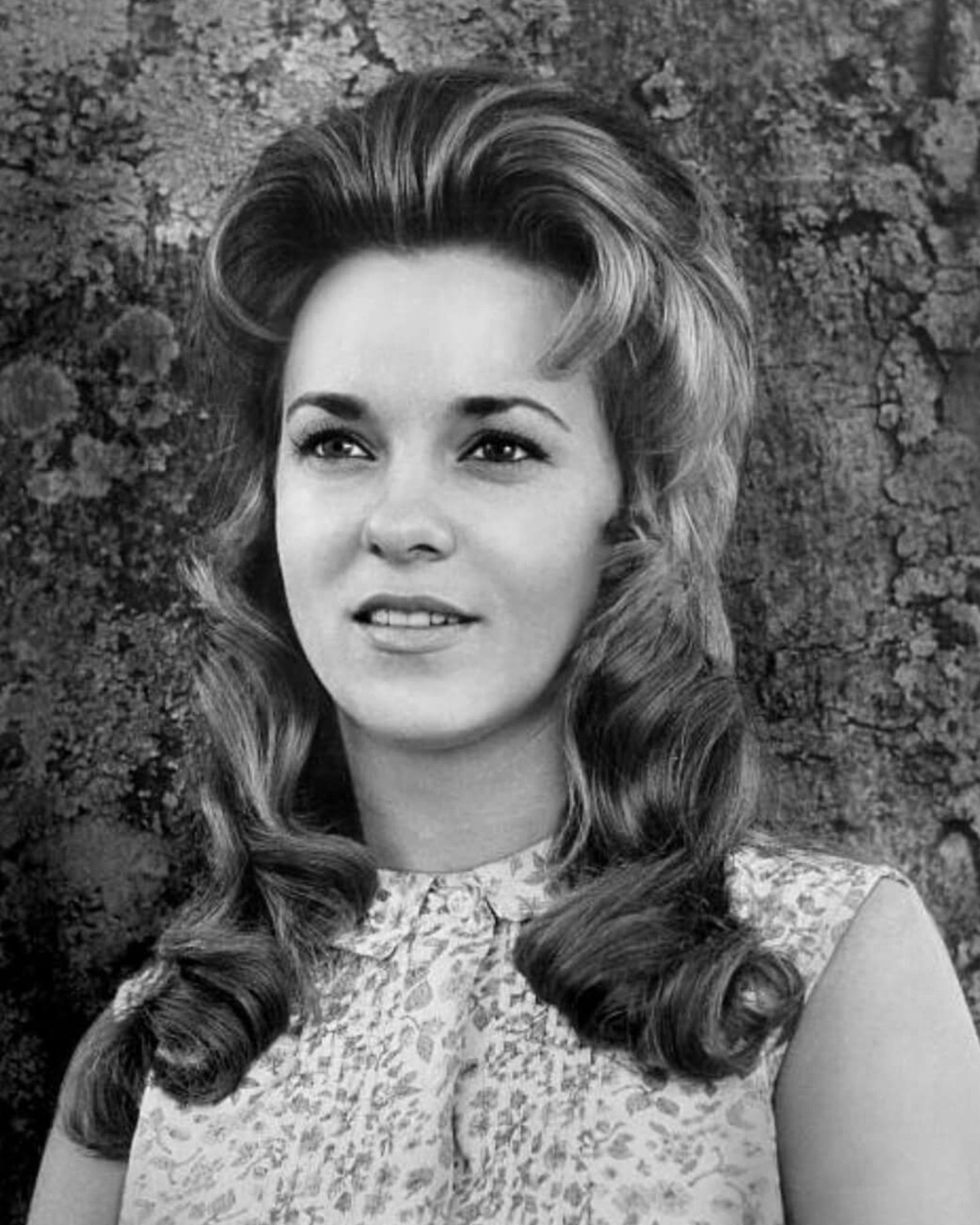
Some country music careers begin with a record deal handed down from a famous family. Connie Smith’s began with a promise made by a shy five-year-old, a hospital stay, and five silver dollars.
She was born Constance June Meador on August 14, 1941, in Elkhart, Indiana. She was the sixth child in a family of fourteen, and she grew up in West Virginia and Ohio. Her parents were migrant farm workers, and times were often hard. Like a lot of children in rural America back then, she found her escape in the radio, and above all in the Grand Ole Opry on Saturday nights.
At five, she told the people around her that someday she was going to sing on the Opry. It is the kind of thing children say. Almost nobody gets to see it come true.
A guitar during the long recovery
Music ran through the house. Her stepfather played mandolin, one brother played fiddle, and another played guitar. But Connie did not pick up the guitar herself until an accident forced her to slow down.
As a teenager, she was badly hurt in a lawnmower accident that nearly cut off her leg. While she was recovering in the hospital, she was given a guitar. According to the Country Music Hall of Fame, she was eighteen when she taught herself to play acoustic guitar during that recuperation. She worked out the chords on her own, with time on her hands and nowhere to go.
She did not rush into show business after that. She sang at local events and eventually joined the cast of a regional TV program, Saturday Night Jamboree, on WSAZ in Huntington, West Virginia. Then she married, settled in Warner, Ohio, and had a son.
Five silver dollars at Frontier Ranch
In August 1963, Connie Smith was a 22-year-old housewife with a four-month-old baby. She and her husband went to Frontier Ranch, a country music park near Columbus, Ohio, to see Opry star Bill Anderson perform. She was talked into entering the talent contest that day.
She sang Jean Shepard’s “I Thought of You” and won. The prize was five silver dollars and a chance to sing on the Grand Ole Opry portion of the show that night, the same show Bill Anderson was headlining. Anderson noticed her voice right away.
About six months later, on New Year’s Day 1964, she saw him again at a show in Canton, Ohio. She stood in line for an autograph like any other fan. Anderson told her that since she loved to sing so much, she ought to come to Nashville. Her reaction, as she later remembered it:
“Yeah, like you can just come to Nashville.”
But she did. In March 1964, with Anderson’s help, she sang on the Ernest Tubb Record Shop’s Midnite Jamboree. That May she came back to Nashville to record four demos of Anderson’s songs. Those demos reached Chet Atkins, who signed her to RCA Records.
“Once a Day” and the Opry
In July 1964, at RCA Studio B, Connie Smith recorded Bill Anderson’s “Once a Day.” It was her very first single, and it spent eight weeks at No. 1. For decades afterward, she remained the only woman in country music to take a debut single all the way to the top.
In 1965, she joined the Grand Ole Opry. The five-year-old’s promise had come true. She went on to score nineteen Top 10 hits through 1973, with songs like “Then and Only Then,” “Ain’t Had No Lovin'” and “Cincinnati, Ohio.”
Choosing family over fame
Stardom never sat easily with Connie Smith. Leaving her children to tour weighed on her. When she moved to Columbia Records in 1973, she wrote into her contract that she could record one gospel album a year, and she spent less time on the road. She later explained that her career was the only thing she could let go of.
Her story kept surprising people. In July 1970, an 11-year-old fan named Marty Stuart met her at a concert and told his mother he was going to marry Connie Smith one day. They married in 1997. Marty Stuart produced her 1998 comeback album and her acclaimed 2011 record Long Line of Heartaches. That same year, Merle Haggard released “Too Much Boogie Woogie,” a song complaining that modern country had drifted too far from singers like her. In 2012, Connie Smith was elected to the Country Music Hall of Fame.
It all traces back to a young woman in a hospital bed, a borrowed guitar, and a stubborn dream from childhood.
Do you remember the first time you heard Connie Smith sing “Once a Day” on the radio? Share your memory with us.