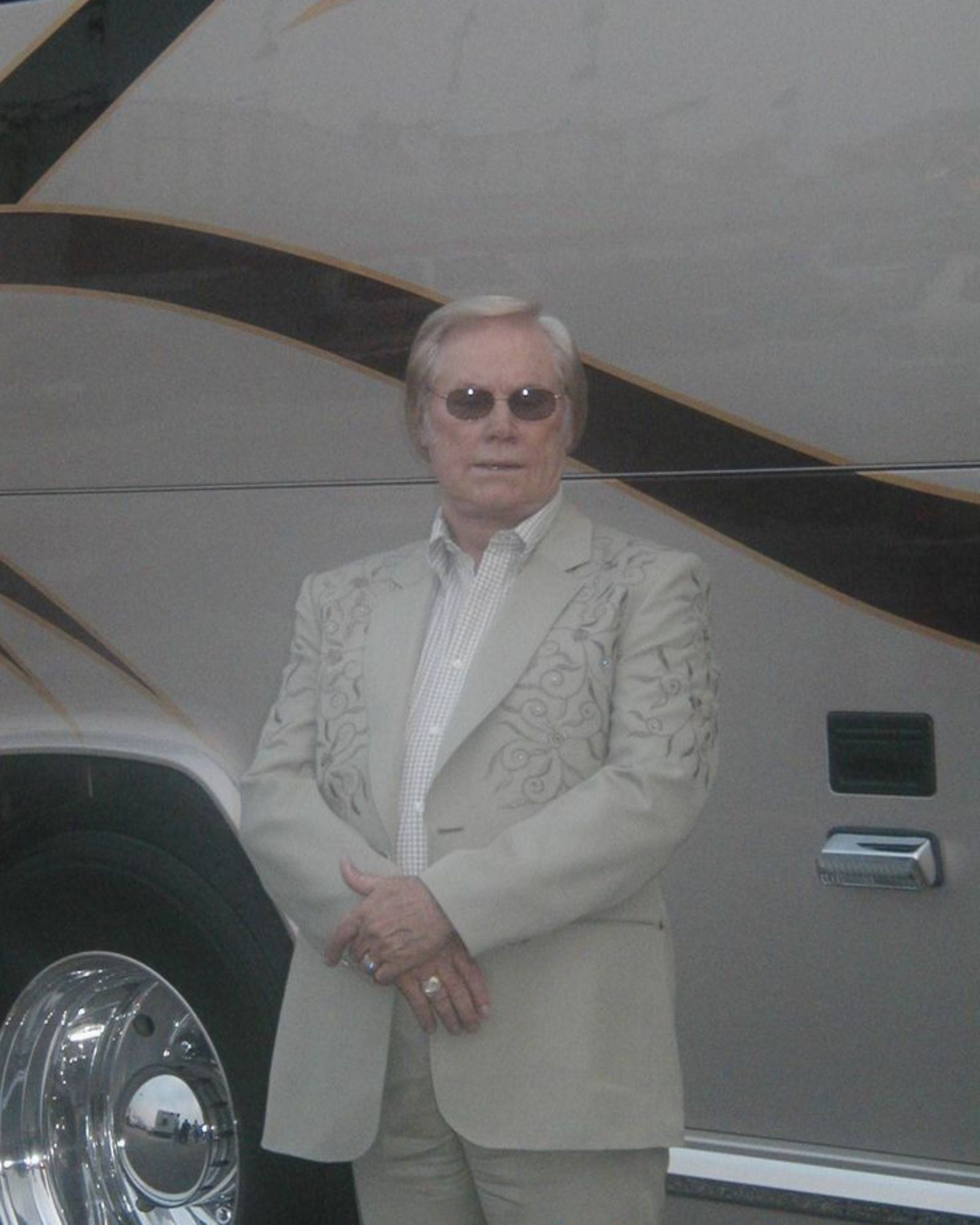
George Jones had planned one last concert in Nashville. It was supposed to be a farewell to the fans who had followed the country legend for more than half a century. Instead, nearly seven months after George Jones died, 16,000 people filled Bridgestone Arena for a concert unlike anything Nashville had seen.
On November 22, 2013, 112 artists took the stage to honor George Jones. Some were longtime friends. Others belonged to younger generations who had grown up listening to the songs that helped define country music.
And throughout much of the evening, one familiar object sat near the side of the stage: George Jones’ empty rocking chair.
The Farewell George Jones Had Planned
Before George Jones passed away on April 26, 2013, at age 81, the Country Music Hall of Fame member had been preparing to conclude a farewell tour called The Grand Tour.
The final performance was scheduled for November 22 at Bridgestone Arena in Nashville. George Jones had invited an extraordinary collection of musicians to participate, including George Strait, Alan Jackson, Garth Brooks, and numerous other country stars.
The concert had already sold out.
When George Jones died, the original reason for gathering disappeared. But Nancy Jones, George Jones’ wife, and the organizers decided the concert should continue.
The planned farewell became a tribute called Playin’ Possum! The Final No Show.
What had been intended as one singer’s goodbye became something much larger: an opportunity for generations of performers to demonstrate how deeply George Jones had influenced American music.
112 Artists, One Remarkable Musical Legacy
The nearly four-hour concert brought together an extraordinary range of musical talent.
George Strait performed “The Grand Tour,” one of George Jones’ unforgettable recordings. Martina McBride joined George Strait for “Golden Ring,” the duet George Jones had famously recorded with Tammy Wynette.
Garth Brooks and Trisha Yearwood appeared, along with Vince Gill, Brad Paisley, Miranda Lambert, Blake Shelton, and numerous other performers.
But the celebration extended far beyond traditional country music.
Soul singer Sam Moore performed “The Blues Man.” Rock musicians, including members of Megadeth, participated alongside country performers. George Jones’ longtime touring band, The Jones Boys, helped provide the music throughout the night.
That remarkable lineup revealed something important about George Jones.
The legacy of George Jones was not confined to one generation, one audience, or even one musical genre.
For decades, other singers had studied the unmistakable voice behind “She Thinks I Still Care,” “The Grand Tour,” and “He Stopped Loving Her Today.” Now those singers were performing the songs in front of the very audience George Jones had hoped to thank.
The Empty Rocking Chair
Among all the famous names and memorable performances, the empty rocking chair became one of the evening’s most meaningful images.
The chair was especially fitting for the singer who had recorded “I Don’t Need Your Rockin’ Chair,” a song about refusing to let age bring an end to a life spent making music.
Now the chair stood as a reminder of the one performer everyone had originally come to see.
As the concert approached its conclusion, Alan Jackson took the stage for “He Stopped Loving Her Today.”
The song had become one of the defining recordings of George Jones’ career. Alan Jackson had also performed it at the public memorial service for George Jones earlier that year.
As Alan Jackson began singing, the audience responded with cheers and joined in. Near the final chorus, Alan Jackson invited Nancy Jones onto the stage.
Thousands of voices carried the song together.
At the conclusion, Alan Jackson gently set the rocking chair in motion. A single spotlight illuminated the empty chair.
It was a simple ending to an enormous celebration. No replacement singer stepped forward to occupy that seat.
The Legacy That Outlived the Final Curtain
George Jones never performed the farewell concert originally planned for Nashville. The final live concert of George Jones’ career had taken place months earlier, on April 6, 2013, in Knoxville, Tennessee.
But the November tribute offered a different kind of farewell.
The evening demonstrated that the influence of George Jones did not end with the final performance or the final recording.
It continued through the musicians who had learned from George Jones, the friends who remembered George Jones, and the thousands of fans who still knew the songs well enough to sing along.
There is something especially moving about the fact that George Jones was absent from the biggest celebration of the farewell tour.
The concert still sold out. The musicians still arrived. The audience still sang.
George Jones never got to take that final bow. But on November 22, 2013, an arena full of people showed just how much of George Jones remained in country music.