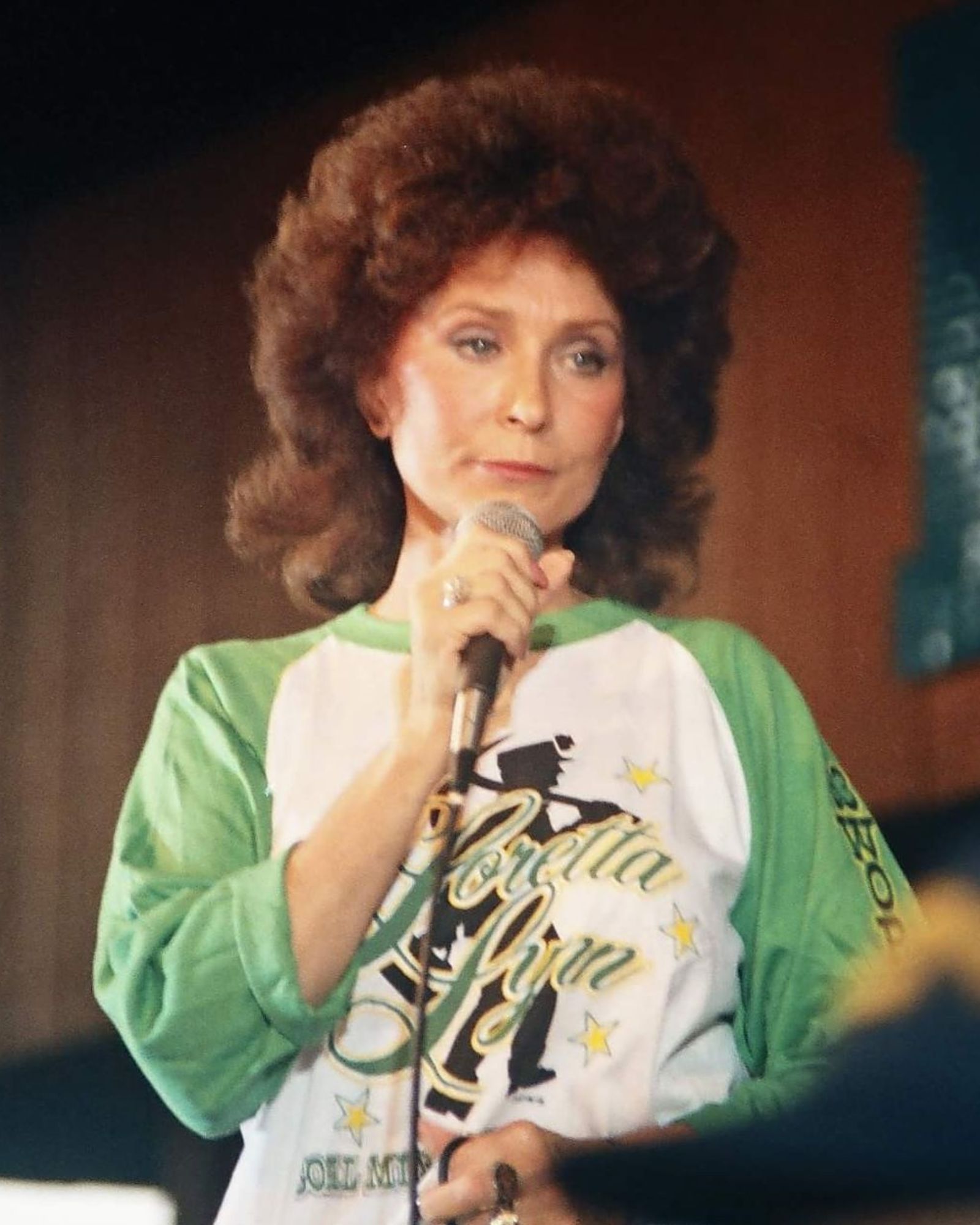
Loretta Lynn had more childhood memories than one country record could hold. When producer Owen Bradley asked Loretta Lynn to shorten a deeply personal song, the decision brought tears. Years later, the finished recording was famous, but Loretta Lynn could no longer recall all the words left behind.
In an interview published by songwriter and journalist Paul Zollo in 2015, Loretta Lynn remembered an early version with about ten verses. Owen Bradley thought the song was too long. Loretta Lynn recalled removing approximately four.
“And I cried the whole time.”
The song was “Coal Miner’s Daughter.” What listeners came to know as a compact account of growing up in Kentucky had begun as something longer, with more room for the people and experiences that shaped Loretta Lynn.
A childhood worth remembering
Born in Butcher Holler, Kentucky, Loretta Lynn was the second of eight children. A father’s work in the coal mines supported a large family, while a mother’s labor kept the household going. Those circumstances eventually became the foundation of Loretta Lynn’s most recognizable song.
The record moves through a childhood measured in work, seasons, family routines, and the things money could not easily buy. The affection is unmistakable, even when the details describe hardship. Loretta Lynn remembers the effort required to keep children clothed and fed, and the pride that survived those difficult conditions.
One memory Loretta Lynn shared with Paul Zollo went beyond the familiar recording. As a child, Loretta Lynn wore shoes with holes and used cardboard inside them. On a cold day, Loretta Lynn’s father found Loretta Lynn crying beside a creek and carried Loretta Lynn home.
That small family moment helps explain why shortening the song could hurt. A verse about childhood might occupy only a few seconds of a record, yet represent something remembered for a lifetime.
A glimpse of what the record left out
A separate interview with NPR’s Liane Hansen, broadcast in 2000, preserved another revealing detail. Loretta Lynn remembered writing a verse about a mother papering the walls with pictures from movie magazines.
Among the actresses pictured were Bette Davis, Claudette Colbert, and Loretta Young. According to Loretta Lynn’s account, the pictures helped inspire the name chosen before Loretta Lynn’s birth.
That recollection offers a glimpse of the larger family story surrounding the song. It also calls for care when describing the missing verses: some memories were preserved in interviews, even though Loretta Lynn later expressed regret about losing the discarded lyrics.
The exact wording of those verses and the experiences behind them are different things. Listeners can still learn about the childhood without pretending that the complete original song has been recovered.
The shorter song reached far beyond Kentucky
Released in 1970, “Coal Miner’s Daughter” reached No. 1 on the country chart. The personal story connected with people whose childhood homes looked different but whose parents had made familiar sacrifices.
The title continued into Loretta Lynn’s bestselling 1976 autobiography and the 1980 film starring Sissy Spacek. A few minutes of music had become the doorway to a much larger life story. In 2009, the recording was selected for the Library of Congress’s National Recording Registry.
Those achievements make Loretta Lynn’s regret especially touching. The recording preserved a family history for millions of listeners, while its songwriter still remembered that more had once belonged to it.
Today, the surviving verses remain enough to bring that Kentucky childhood into view. Behind them is another detail worth remembering: Loretta Lynn once struggled to make the story shorter because the people in it mattered so much.