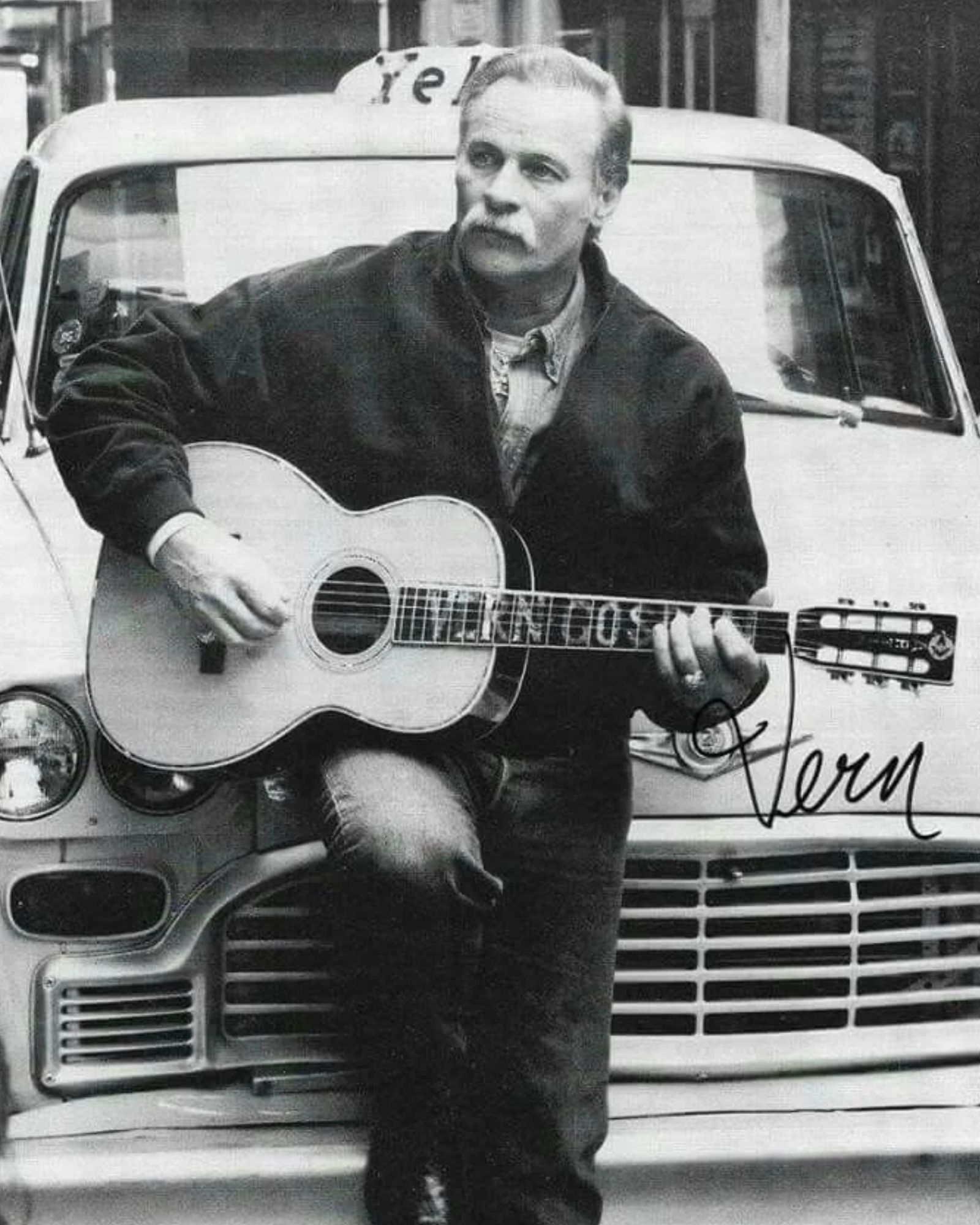
When Vern Gosdin’s marriage ended, Vern Gosdin told a reporter that Beverly Gosdin had left behind just one thing: a Labrador retriever named Smoke.
It was October 1989, and journalist Dave Hoekstra was interviewing the country singer about the most personal album of Vern Gosdin’s career. The reporter mistakenly described Smoke as a coonhound. Vern Gosdin immediately corrected the mistake.
“Well, he’s not a coonhound, he’s a lab.”
Vern Gosdin went on to describe Smoke as almost human and said Vern Gosdin wouldn’t trade the dog for anything.
It was a small exchange, but it revealed something about the man behind one of country music’s most recognizable voices. At 55, Vern Gosdin was enjoying remarkable professional success while dealing with the end of an 11-year marriage.
The Marriage Behind the Music
Vern Gosdin and Beverly Gosdin had been together through important years of Vern Gosdin’s career. By Christmas 1988, according to Vern Gosdin’s account, the marriage had broken apart.
The timing was especially difficult. Vern Gosdin had finally achieved the kind of recognition that had taken decades of recording, touring, and struggling with independent labels to secure.
The 1988 album Chiseled in Stone had brought renewed attention to Vern Gosdin’s traditional country sound. Songs such as “Set ‘Em Up Joe” and “Chiseled in Stone” reminded listeners why Vern Gosdin had earned the nickname “The Voice.”
Yet the success came during a period of personal turmoil.
In the October 1989 interview, Vern Gosdin acknowledged that the divorce had been deeply painful. Vern Gosdin said the love had not simply disappeared when the marriage ended.
“I tell you, I really did love my wife.”
Vern Gosdin also admitted that the sadness had lasted a long time. Rather than trying to hide those feelings in the recording studio, Vern Gosdin put them into songs.
How a Broken Marriage Became “Alone”
Released by Columbia Records in June 1989, Alone became one of the most revealing albums Vern Gosdin ever recorded.
Produced by Bob Montgomery, the record placed Vern Gosdin’s distinctive voice against traditional country arrangements. The songs repeatedly returned to separation, regret, loneliness, and relationships that could no longer be repaired.
Vern Gosdin co-wrote most of the album’s ten tracks with collaborators including Max D. Barnes, Hank Cochran, Mack Vickery, Buddy Cannon, and Steve Gosdin.
The results were significant.
“I’m Still Crazy,” written by Vern Gosdin, Buddy Cannon, and Steve Gosdin, reached No. 1 on Billboard’s country chart in 1989. It became Vern Gosdin’s final chart-topping country single.
“That Just About Does It,” written with Max D. Barnes, climbed to No. 4. “Right in the Wrong Direction” followed into the country Top 10 in 1990.
But one album track offered a particularly revealing glimpse into the songwriting process.
The Remark That Became a Song
In a June 1989 interview with Cash Box, Vern Gosdin discussed the origins of “Do Me a Favor.”
According to Vern Gosdin, Beverly Gosdin had once suggested that leaving the marriage might actually be doing Vern Gosdin a favor.
Vern Gosdin turned that painful exchange into the central idea for a song.
It demonstrated how closely Vern Gosdin’s songwriting could follow everyday conversations. An argument, an unexpected remark, or a difficult memory could become the beginning of a country record.
Vern Gosdin even carried a small notebook to capture ideas. During the October 1989 interview, Vern Gosdin estimated that roughly 150 ideas were waiting in that notebook.
For Vern Gosdin, songwriting was not simply a way to revisit difficult experiences. It was also a way to keep working through them.
What Vern Gosdin Said Years Later
By November 1991, Vern Gosdin could speak about the troubled marriage with more distance and even some humor.
In an interview with the Phoenix New Times, Vern Gosdin joked that each failed marriage had produced roughly nine or ten good songs.
The remark was funny, but the earlier interviews showed how painful the experience had been while the songs were being written.
The marriage also had another side, belonging to Beverly Gosdin. Vern Gosdin’s interviews documented Vern Gosdin’s feelings and memories, not a complete account of everything that happened between the two.
Still, those interviews explain something important about Alone.
The album was not merely a collection of fictional heartbreak songs. Many of its ideas came directly from experiences Vern Gosdin was living through.
And behind those records was a detail few listeners would have known in 1989: Vern Gosdin, recovering from a painful separation, still had a Labrador named Smoke waiting at home.
That little story remains one of the most personal glimpses of the country singer behind “The Voice.”